
REGENERATIVE GRAZING
Healing the land, nourishing people, honoring Creation.
Nutrient-dense food starts long before the animal is born; it’s a process that begins with people who believe in a system that coexists with creation, leading to an understanding of practices that promote what has long stood the tests of time.
“The soil is the great connector of lives, the source and destination of all. —Wendell Berry, The Unsettling of America: Culture and Agriculture
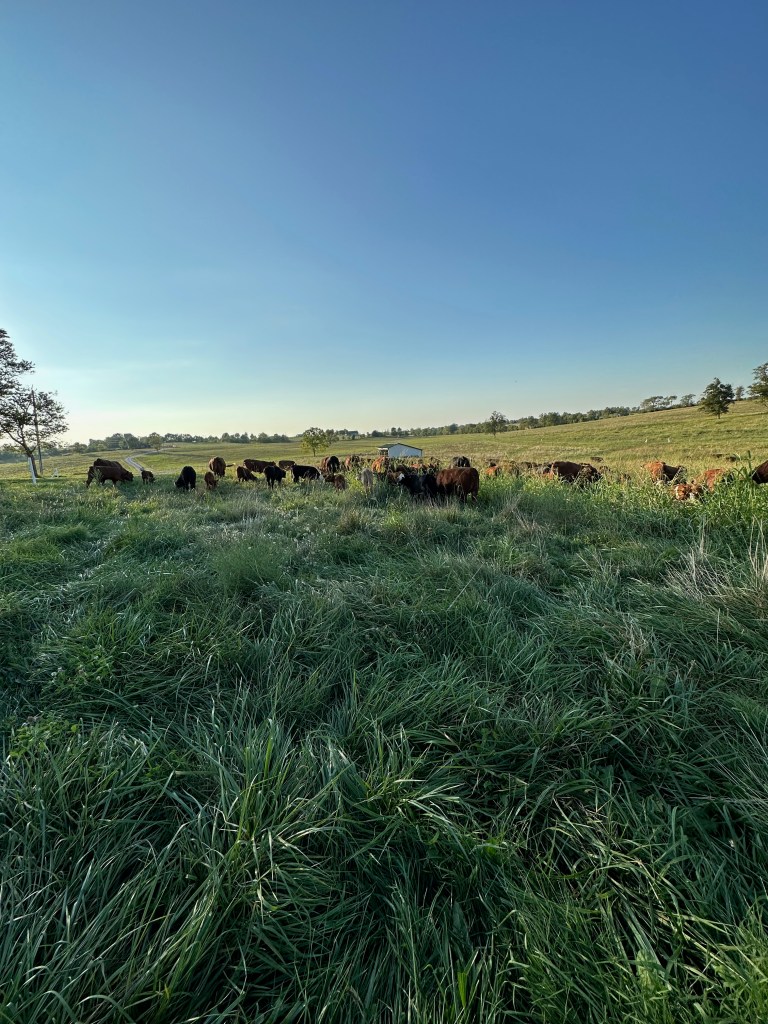
Why We Graze Regeneratively
At Unity Farms, we believe agriculture should heal—not harm. That’s why our cattle are part of a regenerative grazing system rooted in nature’s design. Rather than forcing land to produce through chemicals and constant disturbance, we partner with it. Our mission is to restore life to the soil, build resilient ecosystems, and provide nutrient-dense food for our community.
We graze regeneratively because:
- It multiplies abundance: Properly managed grazing increases productivity without needing more land or inputs.
- Soil is the foundation: Healthy soil grows better forage, holds more water, stores carbon, and resists drought.
- Nature knows best: Animals were designed to move—so we mimic natural herd migrations to stimulate land healing.
How We Do It: The Grazing Plan
Non-Selective, High Harvest Efficiency Grazing
Key principles we follow:
- Grazing at full recovery – We never graze too early. Instead, we allow forages to reach full recovery—the point at which they have replenished root reserves and achieved peak regrowth. This supports deeper roots, stronger stands, and healthier soil biology through robust photosynthesis.
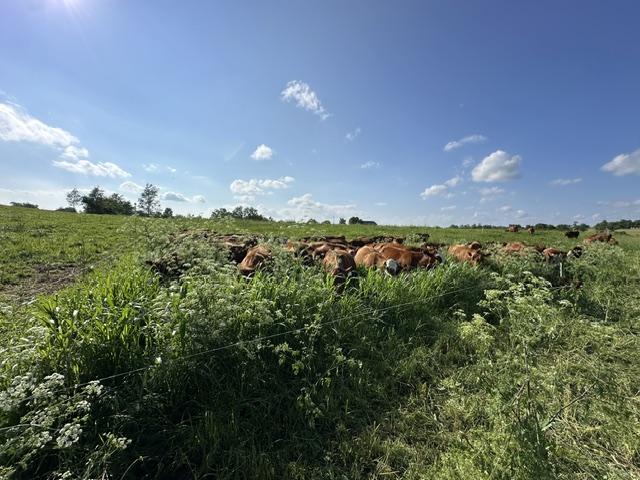
- Non-selective harvest – Grazing in tighter groups encourages natural competition, leading animals to consume most of the available forage instead of picking only the tender parts. This improves plant utilization, evens grazing pressure, and encourages regrowth of a more diverse and resilient plant community. Grazing this way also helps prevent overgrazing. Overgrazing is not about how short a plant is grazed, but rather grazing plants before they’ve had time to fully recover. By ensuring full recovery before grazing and harvesting most of the available forage in a single pass, we protect root reserves, reduce plant stress, and promote long-term pasture health.
- High harvest efficiency – Our goal is to maximize the percentage of available forage that is actually consumed during each grazing pass. This allows us to harvest more forage per acre and reduce waste. Importantly, removing 75% or more of the available forage helps shorten the recovery timeline. Leaving excess stems and leaves after grazing can cause plants to continue respiring, which depletes root reserves and leads to overgrazing during the next rotation. While high harvest efficiency does not always align with peak animal performance, it is essential for building long-term pasture resilience and productivity.
- Recovery based on conditions – Recovery periods are not fixed by the calendar. Instead, we monitor forage regrowth and soil response, allowing each paddock to rest until it reaches full recovery. Factors such as season, rainfall, temperature, and sunlight all influence how quickly a pasture recovers. This adaptive approach ensures we are always grazing at the optimal time for plant health and long-term productivity.
- High stock density, purposeful impact – We graze cattle in tight groups for short durations, just like wild herds once did. This creates intentional hoof impact that:
- Presses seeds into the soil for better germination
- Distributes manure and urine evenly as natural fertilizer
- Breaks soil crust to improve water infiltration
- Stimulates plant growth without overgrazing or compaction
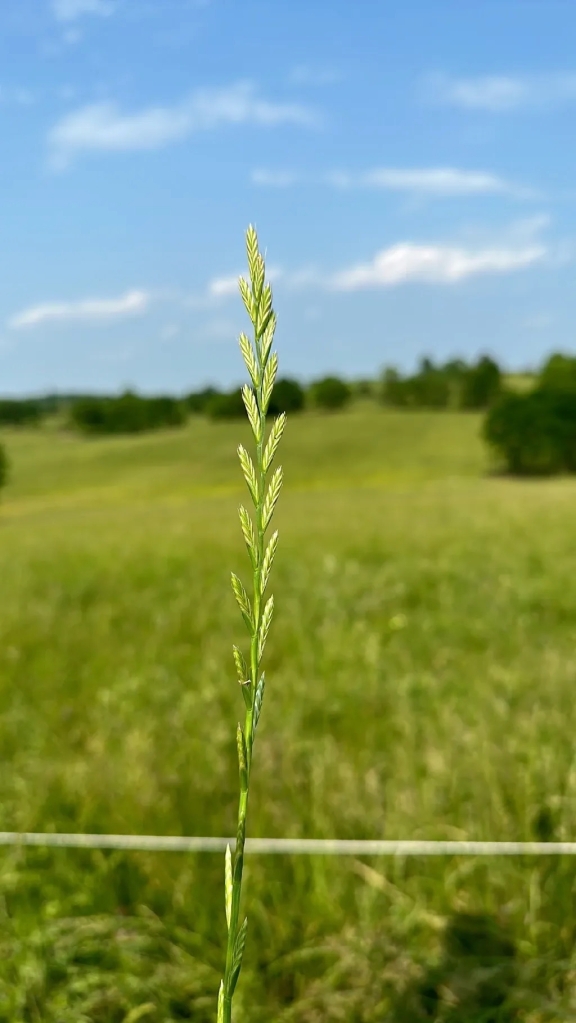
It’s not about avoiding disturbance—it’s about applying it wisely to mimic nature, spark biological activity, and set the stage for renewal.
This isn’t just “rotational grazing.” It’s intentional, adaptive, and designed to restore.
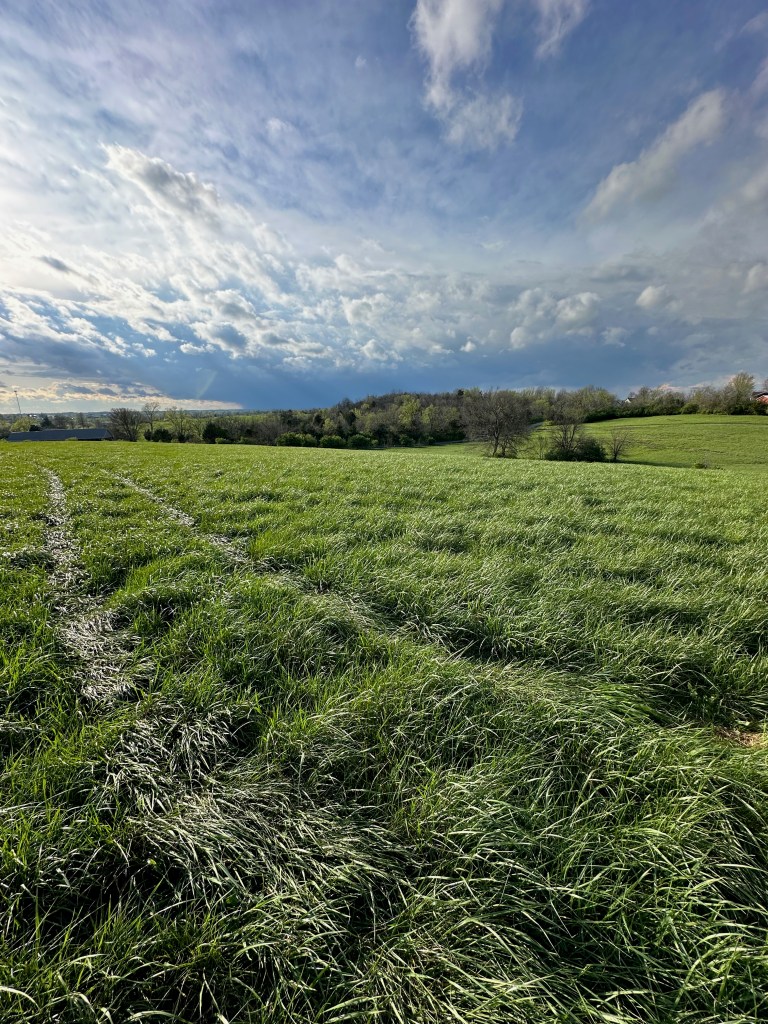
What It Does: For Land, Animals, and You
✅ Soil Regeneration
Our grazing builds organic matter, promotes water infiltration, and revives dormant biology. You can see the change—thicker grass, fewer weeds, and more earthworms each year.
✅ Biodiversity Revival
As we rotate our animals, birds, pollinators, and native species return. Each pasture becomes a micro-ecosystem buzzing with life.
✅ Nutrient-Dense Beef
Animals finished on diverse, fully recovered pasture produce beef that’s richer in Omega-3s, CLAs, and minerals—without any GMOs, antibiotics, or synthetic feed.
✅ Food You Can Trust
When you eat from Unity Farms, you’re eating food grown with integrity. You’re supporting real stewardship and transparent, local food.
✅ Hope for the Future
Regenerative agriculture doesn’t just sustain—it improves. This is a path toward healing degraded land, stabilizing climate, and building local food security.
Closing Message:
We farm to honor God, care for His Creation, and serve our neighbors. Regenerative grazing is one way we do that—restoring the land while feeding families with real, nourishing food.
“The earth is the Lord’s, and everything in it.”
– Psalm 24:1
 Unity Farms